Oil Processing & Petrocarbons
Tier
This document is relevant for MV tier content and beyond.
As you enter the MV tier and beyond, you will need to use plastics for your components. Machine hulls require polyethylene or poly(tetrafluoroethylene), circuits require polyethylene or epoxy, and other components will require exotic or particular use plastics such as poly(vinyl butyral). As hydrocarbon chemicals, these plastics are usually made from oil in some form. Oil by itself is not very useful and requires distillation to split it into its three consistuent parts.
Oil is found in bedrock fluid vents, which are only accessible with GTCEu Fluid Drilling Rigs. See Advanced Fluid Drilling Rig for more information on how Fluid Drilling Rigs work.
But I Don’t Want To!
The easiest way to deal with oil processing is to simply not. Nearly everything you get from refining oil can be gotten elsewhere, albeit in tiny amounts or in otherwise very inconvenient methods.
Alternative ways of getting hydrocarbon resources
Chemical |
Usage |
Get it from… |
|---|---|---|
Toluene |
Explosives, mid-game chemistry |
Wood tar |
Benzene |
Chemical precursor |
Wood tar |
Butene |
High-octane gasoline |
N/A |
Butadiene |
Rubber, mid-game chemistry |
N/A |
Propane |
Shawinigan process |
Acetone |
Propene |
Chemical precursor |
Propane |
Ethane |
Fuel, cracking |
Acetic Acid |
Ethylene |
Plastic |
Ethanol |
Methane |
Hydrogen, rubber |
Rubber wood |
Choosing an Oil Type
There are four types of oil:
Raw Oil: 100MB distills into 10mB of Heavy Fuel, 10mB of Light Fuel, and 150mB of Naphtha.
Light Oil: 100MB distills into 6.667mB of Heavy Fuel, 13.334mB of Light Fuel, and 20mB of Naphtha.
Heavy Oil: 100MB distills into 250mB of Heavy Fuel, 45mB of Light Fuel, and 15mB of Naphtha.
Oil: 100MB distills into 30mB of Heavy Fuel, 100mB of Light Fuel, and 40mB of Naphtha.
Note
The reality is more complicated; Light Oil requires 150mB of input for distillation, and regular Oil only requires 50mB of input. Heavy Oil also requires HV distillation towers or MV distilleries to make, making it harder to overclock.
Note
All types of oil also produce sulfuric gas, but that has been omitted here due to actually drilling for natural gas being a much more productive mechanism of obtaining refinery gas.
Distillation
Once you have your desired oil, you need to distill it into the four products of oil. There’s two ways of doing this:
Singleblock distilleries are incredibly fast, but only produce one possible result from the input oil, discarding all of the other products.
Multiblock distilleries are slow and require a lot of vanadium-steel, but produce all of the possible products of a recipe. See Distillation Tower for more information.
Desulfurisation
Distilling oil doesn’t get you raw Light Fuel/Heavy Fuel/Naphtha, but versions of them that are mixed with sulfur impurities. Pumping hydrogen through them will get you the desulfurised versions, as well as a small amount of hydrogen sulfide as a byproduct.
This works as a closed reaction; the H2S can be electrolysed back into hydrogen and sulfur and the hydrogen can be reused, providing sulfur as a byproduct.
Cracking The Products
Before you can actually distill the oil products into useful hydrocarbons, you need to crack them; this breaks up the long-chain hydrocarbons that are found in oil and oil products into smaller chain hydrocarbons that are more useful for industrial purposes. Like distillation, cracking can be done using two different machines:
Regular chemical reactors can do cracking, but they only produce half of the regular output of the recipe. For example, 1B of Heavy Fuel + 1B of Steam in a chemical reactor produces 500mB of Cracked Heavy Fuel.
The Cracker is a HV tier multiblock that produces the full outputs for every cracker recipe.
Note
The cracker uses more energy per output fuel unit than singeblock chemical reactors and operates in the same time frame as chemical reactors, but with the ability to upgrade the coils for less energy usage, the cracker becomes the preferred way of cracking hydrocarbons later in progression.
After the oil intermediates have been cracked, they can then be distilled into more useful hydrocarbons for industrial usage.
Cracking Types
For oil products, there are four possible ways to crack the intermediates: hydro or steam cracking, and lightly or severely cracking. Hydro-cracking produces lots of methane, ethane, and butane, whereas steam cracking produces a large amount of other hydrocarbons such as propene and ethylene. Similarly, severely cracking the intermediates will have them distill to lots of shorter chain hydrocarbons such as ethylene, and lightly cracking will have them distill to more longer chain hydrocarbons such as toluene.
It’s All Too Much For Me
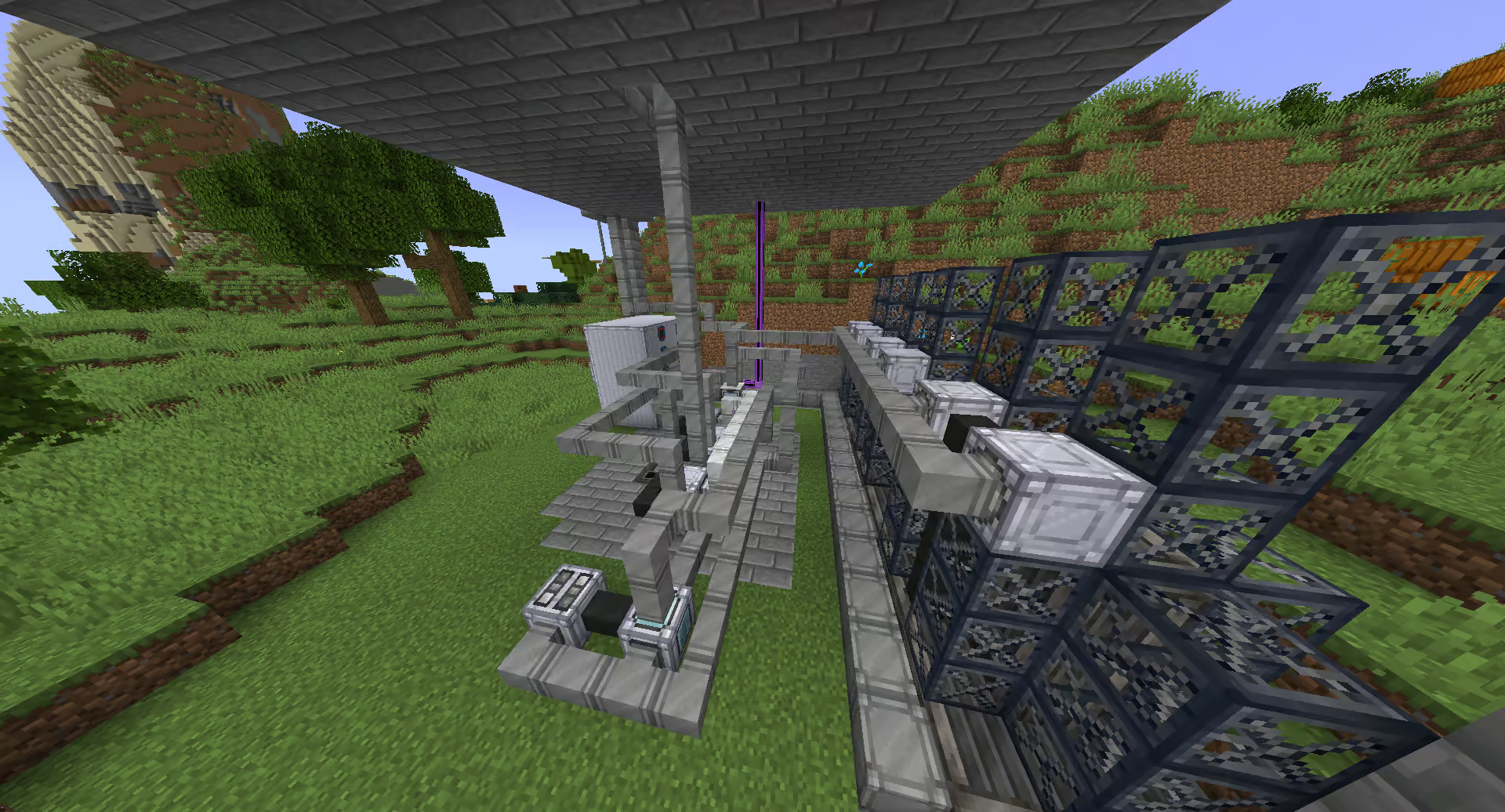
A spaghettilicious oil refining outpost.
A lot of this can be overwhelming, as there’s a lot of choices to make (which oil do you distill? which intermediate should you distill? should you crack with steam or hydrogen?).
If you’re using diesel for power, you can ignore nearly all of this. Distill any of the oils using single block distilleries and mix them together to get diesel; scale them up as your energy needs rise.
The best intermediate for material purposes (i.e. ethylene) is Naphtha, and the best oil for that is Raw Oil at 150mb per bucket of input. Severely Steam Cracked Naphtha gets you 500mB per input as a base and another 300mB from steam cracking propene. Lightly Steam Cracked Naphtha is the best for Butadiene which is required for midgame rubbers.
Steam Cracking Light or Heavy fuel is a waste of time. If you must, hydro-crack them to get extra Naphtha.
As a general rule, any inefficiences you introduce in your oil refineries can be brute forced away with more fluid drills and distilleries.